Discover how competitive fleet management cuts booking times by 50% and boosts passenger satisfaction by 25% for Canadian charter operators in 2026.
Competitive Fleet Management Canada 2026: 50% Faster Bookings
Manual booking processes plague Canadian charter operators. Phone calls stack up, spreadsheets grow unwieldy, and errors multiply. Competitive fleet management transforms this chaos into streamlined automation, maximizing fleet efficiency while cutting booking errors by up to 50%. For charter and private transportation providers across Canada, adopting integrated systems with telematics, dynamic pricing, and real-time dispatch isn’t optional anymore. It’s survival.
Table of Contents
Introduction To Competitive Fleet Management
Core Technologies And Tools In Advanced Fleet Management
Addressing Canadian Charter Operator Challenges With Fleet Management
Automation And Booking Optimization Benefits
Key Takeaways
Point | Details |
|---|---|
Core Integration | Competitive fleet management combines automation, telematics, dynamic pricing, and compliance features tailored for Canadian operators. |
Booking Efficiency | Automated booking systems reduce processing time and errors by up to 50%, eliminating manual spreadsheet workflows. |
Revenue Growth | Dynamic pricing algorithms can increase revenue by up to 15% through demand-responsive rate optimization. |
Passenger Satisfaction | Real-time dispatch and reservation tracking boost passenger satisfaction scores by as much as 25%. |
Regulatory Compliance | Built-in Canadian compliance modules reduce administrative burden and penalty risks across multiple provinces. |
Introduction to Competitive Fleet Management
Canadian charter operators face mounting pressure. The market reached approximately USD 1.5 billion in 2024 and continues growing at 8 to 15% annually, signaling fierce competition and rising customer expectations. Traditional manual methods can’t keep pace. Competitive fleet management integrates automation, real-time telematics, dynamic pricing, and multi-channel connectivity to optimize operations specifically for charter and private transportation.
This approach addresses three critical areas. First, operational efficiency through automation and real-time tracking reduces wasted time and resources. Second, revenue growth via intelligent pricing strategies captures maximum value from every booking. Third, enhanced passenger experience through seamless communication and reliable service builds loyalty in a crowded market.
Understanding fleet management fundamentals starts with recognizing its core components:
Booking automation that eliminates phone tag and spreadsheet errors
Real-time vehicle tracking providing instant fleet visibility
AI-powered tools predicting maintenance needs before breakdowns occur
Dynamic pricing strategies adapting to demand fluctuations
Compliance features ensuring adherence to Canadian regulations across provinces
The Canada fleet management market expansion reflects operators recognizing these benefits. As competition intensifies, the gap widens between operators leveraging modern systems and those clinging to outdated processes. Charter providers who delay adoption risk losing bookings to competitors offering instant quotes and superior service reliability.
Core Technologies and Tools in Advanced Fleet Management
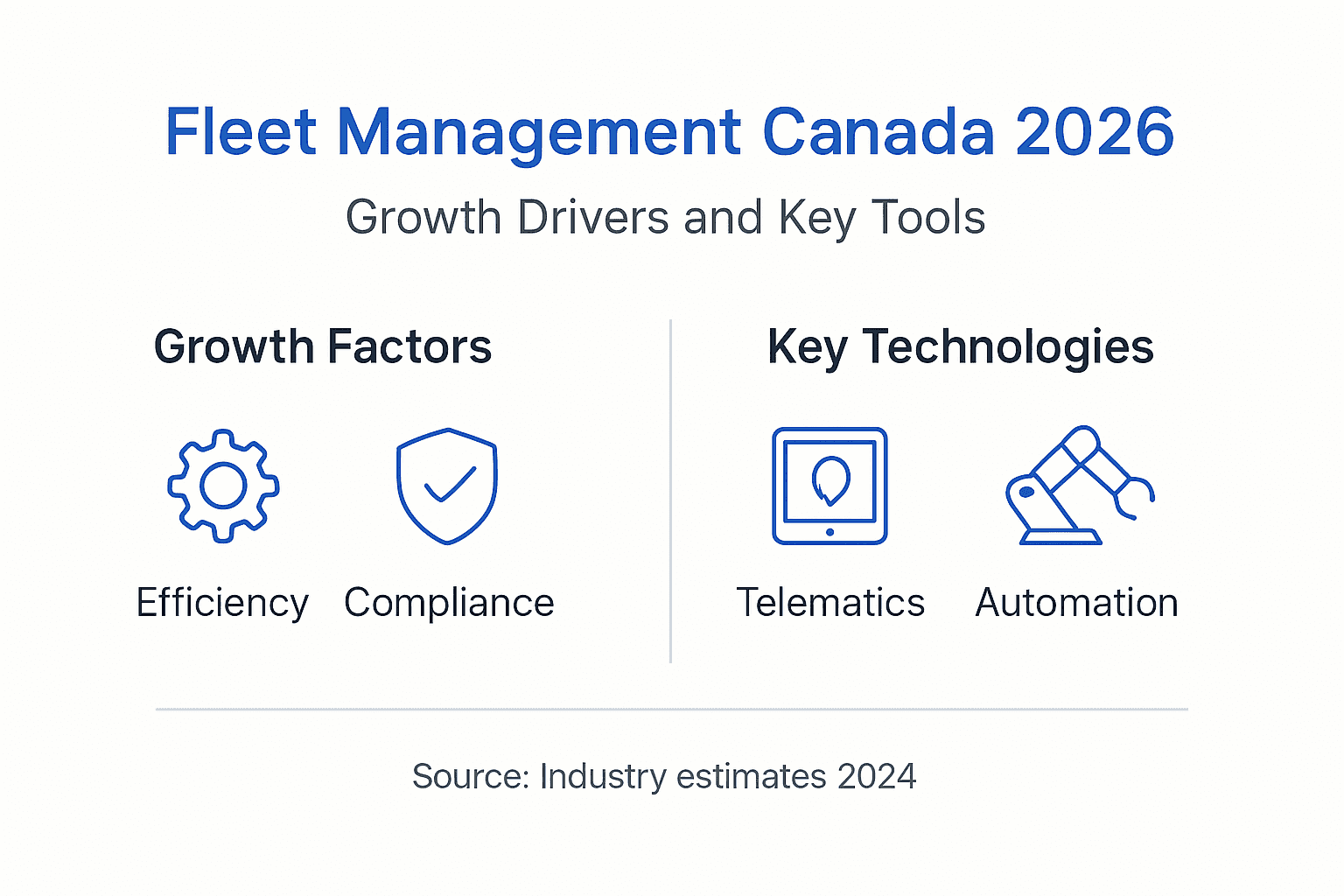
Technology drives competitive advantage. Telematics systems form the backbone, providing real-time GPS tracking, driver behavior analytics, and predictive maintenance alerts. These systems improve fleet utilization by increasing operational efficiency by 20 to 30% through better resource allocation and reduced idle time.
Automation technologies revolutionize customer interactions. Instant quoting engines calculate accurate prices in seconds, eliminating the delays inherent in manual estimation. Online booking portals let customers reserve directly without phone calls, while automated confirmation systems handle communications seamlessly. This shift from reactive to proactive service delivery transforms the customer experience.
Dynamic pricing algorithms add intelligence to revenue management. These tools analyze historical booking patterns, seasonal demand fluctuations, lead time, and competitor pricing to optimize rates continuously. Unlike static price lists, dynamic systems capture premium revenue during high-demand periods while maintaining competitiveness during slower times.
Adoption statistics tell a compelling story. More than 60% of Canadian fleets with 50 or more vehicles have implemented telematics hardware, indicating growing mainstream acceptance. Larger operators recognize the competitive necessity, while smaller fleets increasingly adopt cloud-based solutions that eliminate prohibitive upfront hardware costs.

AI-powered predictive maintenance represents another breakthrough. By analyzing vehicle sensor data, these systems forecast component failures before they occur, enabling scheduled repairs instead of costly roadside breakdowns. Operators report downtime reductions of 25% or more, translating directly to improved service reliability and customer satisfaction.
Exploring connected fleet technologies reveals how data integration creates synergies. When telematics, booking systems, and dispatch tools share information seamlessly, operators gain unprecedented visibility and control. A single platform view eliminates information silos and enables coordinated decision-making across the entire operation.
Addressing Canadian Charter Operator Challenges with Fleet Management
Canadian operators navigate unique challenges. Regulatory complexity tops the list. Electronic logging device (ELD) mandates became mandatory for commercial drivers in 2023, requiring compliance infrastructure that older systems lack. Modern fleet management platforms incorporate compliance modules that automatically track hours of service and generate required reports.
Multi-provincial operations compound regulatory headaches. Each province maintains distinct insurance requirements, licensing rules, and operational standards. Fleet management platforms designed for Canadian charter operators incorporate multi-provincial regulatory compliance features, centralizing compliance tracking across jurisdictions and reducing administrative overhead.
Geographic challenges unique to Canada demand specialized solutions. Severe weather impacts routing decisions, vehicle maintenance schedules, and passenger safety protocols. Long-haul routes spanning vast distances require sophisticated logistics planning that manual methods can’t match. Fleet systems adapted for Canadian conditions incorporate weather data feeds, alternative route planning, and cold-weather vehicle monitoring.
Sales channel connectivity presents both challenge and opportunity. Canadian operators increasingly sell through intermediaries: hotels booking airport transfers, tour companies arranging multi-day charters, and event planners coordinating group transportation. Modern platforms enable API integrations with these partners, expanding distribution without proportional increases in administrative workload.
Pro Tip: Choose fleet software with built-in Canadian compliance modules rather than generic international platforms. The upfront cost difference pales compared to potential penalties and the ongoing administrative burden of manual compliance tracking.
Understanding Canadian regulatory compliance challenges helps operators prioritize platform features. Systems lacking robust compliance tools create hidden costs through staff time spent on manual record-keeping and increased audit risk. The right platform transforms compliance from burden to competitive advantage.
Reviewing ELD compliance requirements clarifies what operators need from their systems. Automatic duty status tracking, driver vehicle inspection reports, and secure data retention must function seamlessly to avoid violations that could sideline vehicles and drivers.
Automation and Booking Optimization Benefits
Manual booking processes waste time and money. Phone calls interrupt workflow, spreadsheets introduce errors, and quote turnaround delays cost conversions. Automated booking and instant quoting systems reduce these manual workloads, decreasing booking times and errors by up to 50%.
Instant quoting transforms customer acquisition. Visitors to your website receive accurate prices immediately, eliminating the
Recommended