Fleet management streamlines booking, dispatch, and compliance. Learn types, key features, risks, costs, and practical benefits for operators.
What Is Fleet Management and Why It Matters
Many Canadian charter and private transportation operators think fleet management is simply about tracking vehicles on a map. In reality, it is a comprehensive operational approach that connects maintenance, fuel use, safety, driver oversight, and smart booking processes. This broader understanding is crucial, especially for operators new to automation who want to cut costs and fill more trips. Discover how the right system transforms daily workflow and supports stronger revenue all season.
Table of Contents
Fleet Management Defined And Common Misconceptions
Types Of Fleet Management Systems And Solutions
Key Features And How Fleet Management Works
Risks, Costs, And Operational Implications
Comparing Traditional And Automated Approaches
Key Takeaways
Point | Details |
|---|---|
Comprehensive Fleet Management | It encompasses maintenance, fuel optimization, driver safety, compliance, and route planning, not just vehicle tracking. |
Myth of Size | Fleet management is crucial for both small and large operators, impacting revenue regardless of fleet size. |
Data-Driven Decisions | Automation and centralized systems enhance visibility, enabling proactive rather than reactive management. |
Cost of Inaction | Without proper fleet management, operational risks such as increased downtime and inefficiencies lead to significant financial losses. |
Fleet Management Defined and Common Misconceptions
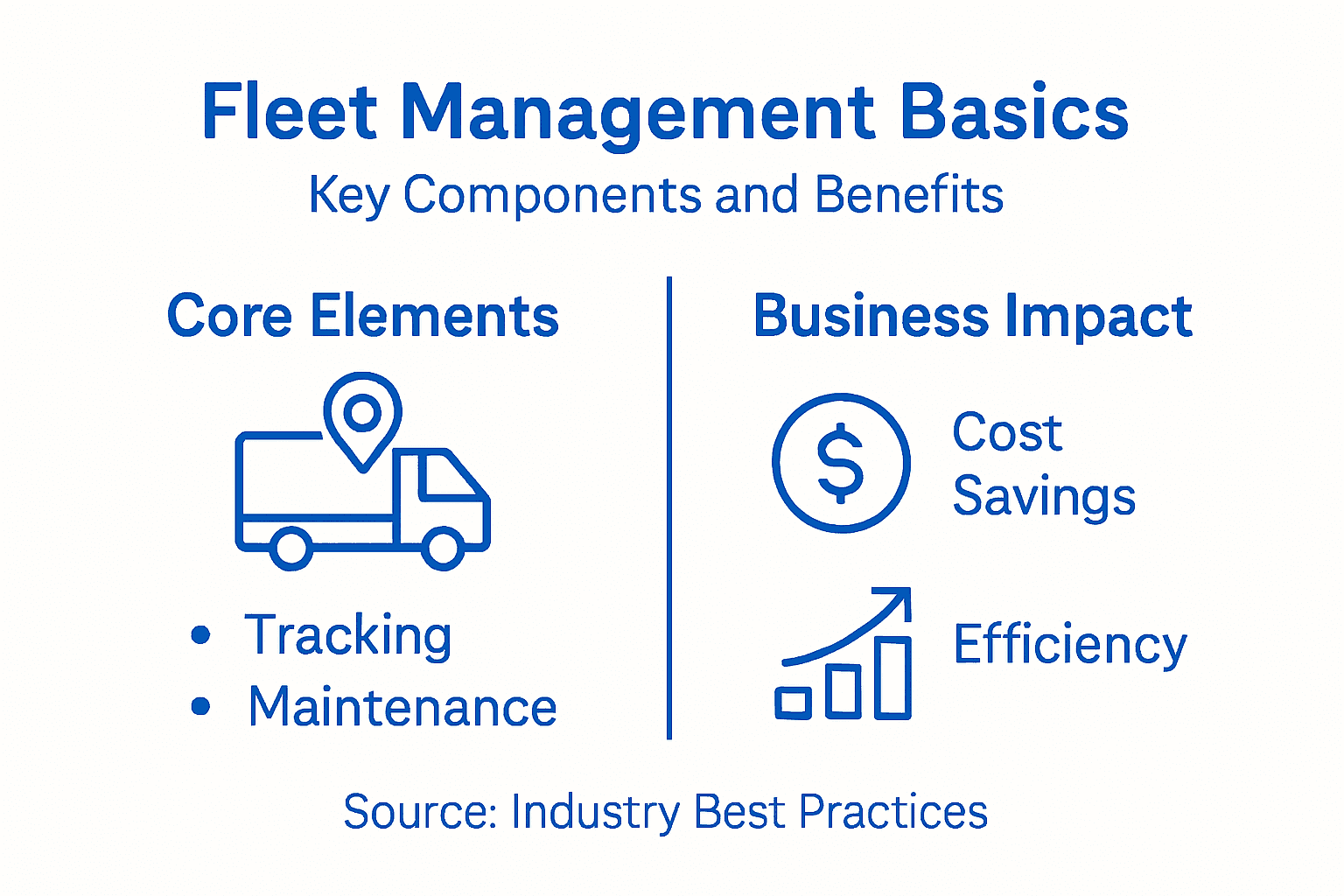
Fleet management is far more than tracking where your vehicles are. It’s a comprehensive operational approach that covers maintenance schedules, fuel costs, vehicle replacement cycles, driver safety, compliance requirements, and route optimization. For charter and private transportation operators, this distinction matters—a lot.
Most operators assume fleet management means installing GPS trackers on their buses or vans and calling it done. That’s misconception number one. Real fleet management touches every aspect of how your business runs, from the moment a booking comes in to when the vehicle returns to the lot.
What Fleet Management Actually Includes
Here’s what comprehensive fleet management covers:
Maintenance management: Tracking service schedules, parts inventory, and repair costs to keep vehicles road-ready
Fuel and energy optimization: Monitoring consumption patterns and identifying waste
Driver management: Safety training, performance metrics, compliance with regulations
Vehicle replacement planning: Knowing when to retire aging assets before they become liabilities
Route planning and dispatch: Optimizing efficiency and reducing idle time
Safety and compliance: Ensuring you meet regulatory requirements and insurance standards
According to systematic research on fleet practices, these elements work together—not in isolation—to drive operational efficiency.
The “Large Companies Only” Myth
Another major misconception: fleet management only applies to large operators with 50+ vehicles. Wrong. Small and mid-sized charter companies benefit dramatically from structured fleet management. A single bus sitting in the yard due to maintenance delays is a revenue drain, whether you operate 5 vehicles or 500.
When you automate booking, dispatch, and scheduling through a connected system, you catch these inefficiencies immediately. You know which routes generate the most revenue. You see exactly how much fuel costs per trip. You identify maintenance issues before they create customer cancellations.
Why This Matters for Your Bottom Line
Fleet management isn’t about control—it’s about visibility. You can’t optimize what you can’t see.
Without fleet management structure, you’re operating on spreadsheets and phone calls. Booking requests get lost. Drivers take inefficient routes. Vehicles get serviced late, creating last-minute cancellations. Revenue leaks everywhere.
With proper fleet management, common myths dissolve and you gain real operational intelligence. You respond faster to booking requests. You maximize vehicle utilization. You reduce unexpected costs.
The core truth: fleet management is a business discipline, not a technology feature. Technology enables it, but the discipline itself transforms how you operate.
Pro tip: Start by tracking three metrics: vehicle utilization rate (hours in use vs. hours available), maintenance costs per mile, and average booking lead time. These three numbers reveal your biggest operational gaps.
Types of Fleet Management Systems and Solutions
Fleet management systems come in different flavors, each designed to solve specific operational challenges. For charter and private transportation operators, understanding which type fits your business is crucial—the wrong choice wastes money and adds complexity instead of solving problems.
At their core, integrated software solutions manage and optimize vehicle fleets by tracking assets, scheduling maintenance, planning routes, and ensuring compliance. But the implementation varies significantly depending on your fleet size, operational complexity, and growth stage.
Real-Time Tracking and Dispatch Systems
This is the foundation most operators start with. Real-time tracking systems show you exactly where each vehicle is, when it will arrive, and current driver behavior. For charter operations, this means you can confirm pickup times to customers instantly and reroute vehicles when bookings change last-minute.

Dispatch systems take tracking further by automating assignments. Instead of manually assigning drivers to routes, the system optimizes based on location, capacity, and current bookings. Your team spends less time coordinating and more time handling revenue opportunities.
Predictive Maintenance and Telematics
Predictive maintenance systems monitor vehicle health continuously. Engine diagnostics, tire pressure, brake condition, fluid levels—all tracked automatically. You get alerts before breakdowns happen, not after a bus sits idle in the yard.
Telematics systems go broader, capturing:
Engine and transmission data: Fuel efficiency, performance metrics
Driver behavior: Acceleration patterns, braking efficiency, idle time
Safety indicators: Speed violations, harsh cornering, seat belt compliance
Environmental conditions: Temperature, GPS location history
Cloud-Based Platforms and Integrated Control Centers
Cloud-based systems centralize everything into one dashboard. Booking requests, dispatch assignments, maintenance schedules, financial data, and compliance records all live in one place. Your team accesses information from anywhere—office, vehicle, or on the road.
The best fleet management system is the one your team actually uses. Complexity kills adoption.
Integrated control centers combine real-time tracking, maintenance alerts, routing optimization, and driver performance into a unified command center. Larger operations use these to coordinate across multiple depots and hundreds of vehicles. Mid-sized operators benefit from simplified versions focused on their core needs.
Choosing the Right System for Your Operation
Start with your biggest pain point. Are bookings getting lost in your process? Real-time booking and dispatch automation solves that. Is maintenance eating your margins? Predictive systems prevent expensive failures. Is driver safety a concern? Telematics provides visibility.
The right solution scales with you. A system that works for 5 vehicles should grow to handle 25 without requiring a complete rebuild.
Pro tip: When evaluating systems, prioritize integration with your existing booking process. A system that automates quoting and reservations directly from your website eliminates manual data entry and booking errors that drain revenue.
Key Features and How Fleet Management Works
Fleet management systems don’t just sit there collecting data. They actively transform raw vehicle information into actionable intelligence that drives operational decisions. Understanding how this works reveals why the right system matters for your bottom line.
Here’s the mechanics: continuous data collection from vehicles feeds into centralized platforms where analytics identify patterns, inefficiencies, and opportunities. Your team gets real-time visibility instead of guessing based on scattered reports.
Core Features That Drive Results
Every solid fleet management system includes these essential capabilities:
Real-time GPS tracking: Know vehicle location, speed, and arrival times instantly
Maintenance scheduling: Automated alerts based on mileage, engine hours, or calendar intervals
Driver behavior monitoring: Acceleration, braking, idle time, and safety compliance tracked continuously
Fuel consumption tracking: Per-vehicle, per-route, per-driver efficiency metrics
Regulatory compliance management: Documents, certifications, and inspection records centralized
Route optimization: Algorithms suggest the most efficient paths based on traffic, capacity, and booking locations
These features work together. When maintenance alerts hit, dispatch knows not to assign that vehicle to critical bookings. When fuel costs spike on certain routes, management investigates and adjusts pricing or routing.
The table below summarizes the strategic benefits of comprehensive fleet management functions:
Function | Business Impact | Long-Term Value |
|---|---|---|
Fuel Optimization | Cuts costs, reduces waste | Lower operating expenses |
Maintenance Management | Minimizes unplanned downtime | Extends vehicle lifespan |
Driver Performance | Improves safety, compliance | Lowers insurance, fewer claims |
Route Optimization | Boosts efficiency, saves time | Increased revenue capacity |
Compliance Management | Reduces regulatory risk | Avoids fines, smoother audits |
The Data Flow
Here’s how systems actually operate day-to-day:
Vehicles transmit telemetry data continuously to your cloud platform
Data integrates with your booking system, fuel records, and maintenance history
Analytics identify patterns and flag issues requiring attention
Alerts push to your team’s phones or dashboard in real-time
Your team acts on insights—rerouting, scheduling maintenance, adjusting pricing
This cycle repeats constantly. The more data cycles through, the smarter the system becomes at predicting what’s next.
Reducing Downtime and Operational Costs
Real-time insights let you prevent problems instead of reacting to emergencies.
Preventive and predictive maintenance policies slash unexpected breakdowns. You schedule service before failures happen. A bus doesn’t sit idle waiting for a mechanic—it gets fixed during planned downtime.
Route optimization cuts wasted miles. Driver behavior monitoring reduces fuel consumption and insurance claims. Automated quoting based on real-time vehicle availability increases booking acceptance rates.
Every feature connects to one outcome: more revenue, lower costs.
Pro tip: Set up automated alerts for three critical metrics: any vehicle with utilization below 60% hours per week, maintenance items due within 7 days, and fuel costs above your per-mile baseline. These three alerts catch your biggest profit drains.
Risks, Costs, and Operational Implications
Not managing fleet operations strategically creates real financial bleeding. The costs aren’t always obvious until you sit down and calculate them. Fuel price swings, unexpected maintenance, driver shortages, downtime—they all compound into margin-crushing losses.
Without proper fleet management structure, you’re flying blind. You don’t know which routes actually profit, which vehicles drain money, or when breakdowns will hit. That uncertainty becomes your biggest operational risk.
The Cost of Inaction
Let’s talk numbers. Rising operational costs from fuel price volatility, maintenance expenses, and driver shortages hit charter operators hard. A single unexpected transmission failure on your busiest vehicle costs thousands in repairs plus lost revenue from canceled bookings.
Without visibility, you can’t predict these events. You can’t schedule preventive maintenance during slow periods. You can’t adjust pricing to cover fuel cost increases. You simply react and lose money.
Maintenance and Downtime Risks
Inadequate maintenance planning creates cascading problems:
Unplanned downtime: A vehicle breaks down mid-week during peak season, forcing last-minute rebooking costs
Deferred maintenance: Skipping service to save money now creates expensive failures later
Resource allocation chaos: Mechanics scramble to fix emergency problems instead of following planned schedules
Operational inefficiencies: Vehicles sit idle waiting for parts or service slots, losing revenue opportunities
Insufficiently defined failure impact severity in maintenance planning means you don’t prioritize what actually matters. A minor coolant leak gets the same attention as brake system problems—neither gets fixed quickly because nothing is flagged as critical.
Fleet Reliability and Profitability
Fleet unreliability destroys your reputation and revenue. When you can’t confirm bookings because you don’t know vehicle availability, customers book competitors instead. When vehicles break down mid-trip, you face service recovery costs, refunds, and negative reviews.
Poor fleet management doesn’t just increase costs—it decreases the revenue your fleet generates.
The consequences compound: decreased profitability, increased environmental impact from inefficient routing, reduced reliability that drives customers away. One breakdown becomes three canceled bookings, which becomes lost annual revenue.
Balancing Maintenance, Workload, and Availability
Successful operators balance three competing demands:
Keep vehicles maintained and road-safe
Maximize utilization to generate revenue
Minimize disruption when maintenance happens
Without automated systems tracking this, your team spends hours manually coordinating. A vehicle needs service, so it comes off the road. That booking slot sits empty. Revenue disappears. The costs of poor planning exceed the cost of the fleet management system within weeks.
Pro tip: Calculate your average revenue per vehicle per day, then multiply by your current unplanned downtime hours per month. That number is your cost of not having predictive maintenance. Most operators are shocked—it’s usually more than fleet management software costs annually.
Comparing Traditional and Automated Approaches
Most charter operators still manage fleets the way they did 20 years ago: spreadsheets, phone calls, paper maintenance logs, and guesswork. It works until it doesn’t. Then you’re scrambling to find a driver, confirm vehicle availability, and explain to a customer why their booking got canceled.
Automation isn’t just faster—it transforms what decisions you can make and when you can make them. The difference between traditional and automated approaches determines whether you’re reactive or proactive.
How Traditional Fleet Management Operates
Traditional methods rely on manual processes that create delays and errors:
Manual scheduling: A dispatcher takes calls and assigns drivers by memory or phone, based on incomplete information
Limited tracking: You know roughly where vehicles are, but not real-time location, fuel status, or maintenance condition
Reactive maintenance: Problems surface when they break, not before
Paper records: Maintenance history, driver logs, and compliance documents scatter across desks
Slow decision-making: Management reports come weekly or monthly, missing real-time insights
Error rates climb. A booking gets recorded twice. A maintenance task gets forgotten. A driver doesn’t know the best route because optimization happens manually. Every process wastes time and creates opportunity for mistakes.
Here’s a side-by-side look at how traditional and automated fleet management impact core operations:
Area of Operation | Traditional Approach | Automated Approach |
|---|---|---|
Booking Confirmation | Manual calls, slow response | Instant, real-time updates |
Maintenance Scheduling | Paper logs, reactive fixes | Automated alerts, predictive plans |
Vehicle Tracking | Visual checks, rough estimates | GPS and live location data |
Data Access | Scattered, hard to aggregate | Centralized, cloud-based dashboard |
Reporting Frequency | Weekly or monthly, often outdated | Real-time, actionable insights |
Error Rate | High due to manual entry | Low with automated checks |
The Automated Advantage
Automated modern fleet management uses real-time data analytics, automated systems, and predictive maintenance to enhance efficiency. Here’s what changes:
Instant booking confirmation: Real-time availability shows exactly which vehicles can handle each request
Automated dispatch: The system assigns the optimal vehicle based on location, capacity, maintenance status, and driver availability
Predictive maintenance alerts: Issues get flagged before breakdowns happen
Centralized data: Every record lives in one platform accessible from anywhere
Real-time decision-making: Your team responds to alerts immediately, not after the damage happens
When a booking comes in, the system checks vehicle availability, driver status, fuel levels, and maintenance schedules instantly. A response goes to the customer in minutes, not hours.
Efficiency and Cost Impact
Traditional methods cost more to operate than automation—you’re just paying for inefficiency instead of software.
Software solutions provide real-time vehicle monitoring and enhanced fuel management, leading to substantial cost savings. Traditional methods have higher error rates and less effective resource use. The upfront investment in automation pays back in weeks through reduced downtime, fewer missed bookings, and optimized routes.
One operator tracked their transition: manual booking took 45 minutes average, automated booking took 3 minutes. They handled 300% more inquiries with the same team size. That’s not just efficiency—that’s revenue multiplication.
Pro tip: Before implementing automation, document your current process: time spent on manual scheduling, error frequency, downtime hours, and missed booking opportunities. These baseline metrics prove automation’s return on investment within your first month of operation.
Transform Your Fleet Management with Automated Efficiency
Fleet management is not just about tracking vehicles it is a full operational discipline that tackles challenges like maintenance delays unpredictable downtime and lost revenue from manual booking errors. If you want to eliminate the pain of spreadsheets phone calls and uncoordinated dispatch Gridops.ca offers a powerful Canadian-based SaaS platform designed specifically for charter and private transportation providers. Our solution integrates real-time dispatch dynamic pricing and digital trip sheets so you gain complete visibility and control over your fleet operations—all while automating instant quotes and reservations directly from your website.

Take control of your fleet management today by moving beyond the inefficiencies discussed in “What Is Fleet Management and Why It Matters.” Unlock smarter maintenance planning maximize vehicle utilization and accelerate booking responses that your customers expect. Discover how Gridops.ca can help you streamline bookings dispatch and financial analytics on a secure scalable platform built for Canadian operators. Start growing your business now at Gridops.ca and transform operational risk into competitive advantage.
Frequently Asked Questions
What is fleet management?
Fleet management is a comprehensive operational approach that involves tracking and managing vehicle maintenance schedules, fuel costs, driver safety, compliance, and route optimization, among other aspects, to improve overall business efficiency.
Why is fleet management important for transportation operators?
Fleet management is crucial because it provides visibility and operational intelligence, helping transportation operators optimize resource utilization, reduce costs, improve safety, and enhance customer service by ensuring timely responses and efficient vehicle dispatch.
What are the common misconceptions about fleet management?
Common misconceptions include the belief that fleet management only involves GPS tracking or that it’s only applicable to large companies. In reality, it encompasses a wide range of operational elements and is beneficial for businesses of all sizes.
How can fleet management improve operational efficiency?
Fleet management improves operational efficiency by automating processes, optimizing routes, monitoring vehicle health, and enhancing maintenance scheduling, which reduces downtime and operational costs, ultimately leading to increased revenue.
Recommended